




Have you ever asked a chatbot a simple question and got a completely confusing answer? I’ve been there too, and it’s honestly frustrating. By 2026, Artificial Intelligence chatbots aren’t just toys, they’re helping with customer support, HR tasks, and even business systems. But here’s the catch: even smart AI can misunderstand you or give wrong answers if it isn’t tested properly.
That’s why NLP testing tools are so important. They help make sure your AI actually understands what people are saying, remembers context, and takes the right actions. Now I’ll share the five best NLP testing tools, what makes each one special, and the key things to look for before picking one for your team.
Let’s break down what makes these tools different and how they can help your team ship safer, smarter AI products.
What Are NLP Testing Tools?
NLP testing tools are software platforms used to evaluate and validate Natural Language Processing (NLP) systems such as chatbots, conversational AI, and large language models. These tools test whether an AI system correctly understands user language and produces accurate responses.
In an NLP pipeline, testing tools typically analyze the following components:
- Intent classification: Verifies that the model correctly identifies the user’s request (for example, “cancel order” or “check delivery status”).
- Entity extraction: Checks whether key data such as names, dates, products, or locations are captured correctly from a sentence.
- Response accuracy: Confirms that the generated reply matches the user’s query.
- Context handling: Ensures the model maintains conversation context across multiple messages.
- Hallucination detection: Detects responses that contain fabricated or incorrect information.
How We Selected the Best NLP Testing Tools?
The tools in this list were selected based on their ability to test and validate Natural Language Understanding (NLU) systems at scale. The evaluation focuses on capabilities that ensure AI models correctly interpret user language and trigger the right actions.
Key selection criteria include:
- Generative testing: Automatically creating diverse user inputs such as slang, typos, and varied phrasing.
- End-to-end validation: Confirming that a text input triggers the correct workflow, API call, or system action.
- Enterprise integration: Supporting business platforms like SAP, Oracle, or Workday.
- API verification: Validating intent classification, entity extraction, and confidence scores.
- Scalability: Running thousands of automated conversational test scenarios.
These capabilities ensure that an NLP system understands user intent accurately and executes the correct outcome.
Top 5 Best NLP Testing Providers to Try Once
Here are the five platforms we’re covering:
1. Functionize
- Founded: 2014
- Headquarters: San Francisco, CA
- Key Feature: “testGPT” generative AI for creating natural language test cases
- Recognition: “Best Corporate Innovation in AI” (AIconics)
- Core Tech: NLP-driven test creation from plain English descriptions
Functionize is an AI-driven testing platform designed to generate and validate natural language test scenarios for conversational systems. Its testGPT capability uses generative AI to create large sets of realistic user inputs that simulate how people actually communicate with chatbots and AI assistants.
Instead of relying on manually written scripts, the platform automatically produces language variations that include typos, informal phrases, abbreviations, and complex sentences. These variations help developers evaluate whether an NLP model can correctly interpret real-world user requests.
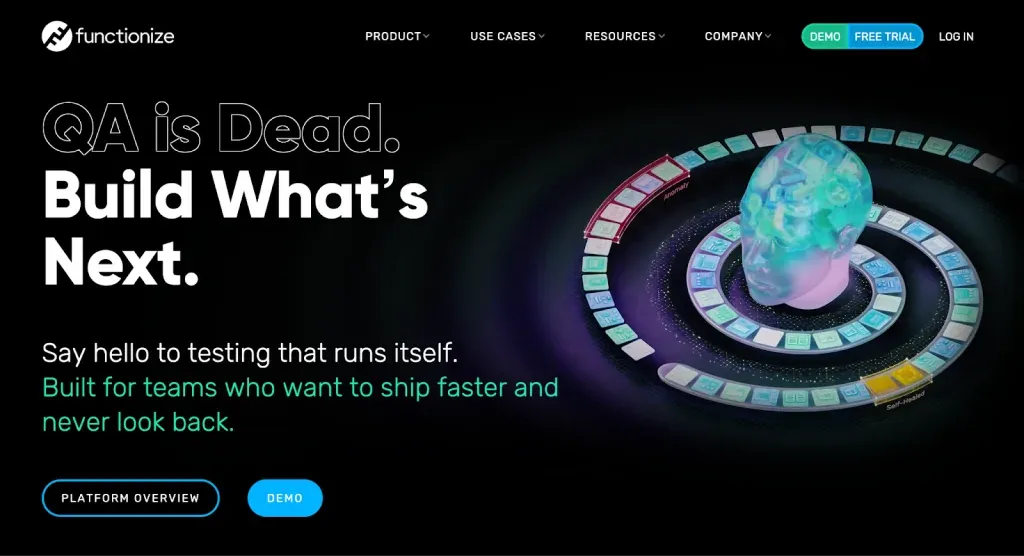
Functionize also enables teams to generate thousands of conversational test cases without writing code, making it easier to stress-test AI models against diverse linguistic patterns before deployment.
Best For: Generating large datasets of natural language test inputs.
Standout Feature: Generative AI that automatically produces thousands of linguistic test variations.
here is the advantages and disadvantages of using Functionize:
| Advantages: Why Functionize Excels | Limitations: What to Consider |
|---|---|
| Generates thousands of natural language test variations automatically | May require cloud resources for very large datasets |
| Handles slang, typos, and multi-clause sentences | Focused mainly on test generation; less emphasis on enterprise system integration |
| No coding required to create test cases | Can be complex for teams unfamiliar with generative AI workflows |
| Stress-tests AI models against real-world language usage | Pricing may be high for smaller organizations |
| Accelerates training and validation datasets | Limited visual UI testing capabilities |
2. ACCELQ
- Founded: 2014
- Headquarters: Dallas, TX
- Key Feature: Codeless API validation for NLP backends (Intents/Entities)
- Recognition: Gartner Magic Quadrant Leader
- Architecture: Unified platform for validating Chatbot logic and API responses
ACCELQ focuses on validating the underlying logic of conversational AI systems. Instead of only checking chatbot responses, the platform connects directly to the NLP engine’s API to analyze how user inputs are classified and processed.
The tool verifies whether a request is mapped to the correct intent and entity structure with reliable confidence scores. For example, when a user says “Cancel my order,” ACCELQ confirms that the system classifies the request under the correct intent rather than mislabeling it as a different action.
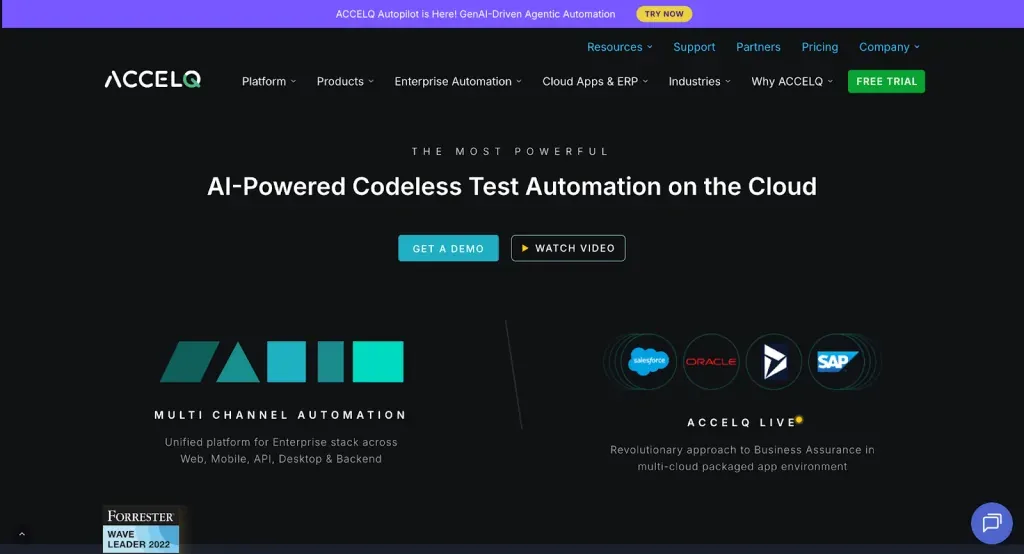
By validating the JSON responses and API outputs generated by NLP engines, ACCELQ helps ensure that chatbot responses are based on accurate intent recognition rather than accidental matches.
Best For: Validating intent classification and entity extraction at the API level.
Standout Feature: Codeless validation of JSON responses from NLP engines such as Dialogflow or Amazon Lex.
| Strengths: Why ACCELQ Stands Out | Cautions: Potential Drawbacks |
|---|---|
| Validates NLP intents and entity extraction at the API level | Limited focus on UI or ERP workflows |
| Codeless validation of JSON responses | Requires integration knowledge for certain NLP engines |
| Provides confidence scores to reduce misclassification risks | May not generate large test data science automatically |
| Scientific approach ensures structured logic testing | Primarily suited for API-driven chatbot validation |
| Reduces risk of “right answer, wrong reason” errors | Smaller teams may find setup initially complex |
3. Panaya
- Founded: 2006
- Headquarters: Hod HaSharon, Israel / Hackensack, NJ
- Key Feature: Testing conversational interfaces for SAP/Oracle ERPs
- Recognition: QA Vector “User Experience Testing Vendor of the Year”
- Core Tech: Ensuring natural language queries trigger accurate business transactions
Panaya focuses on testing conversational AI that interacts with enterprise resource planning (ERP) platforms such as SAP and Oracle. Many organizations now allow employees to query systems or initiate workflows using natural language interfaces.
The platform validates whether a user command is correctly interpreted by the NLP model and translated into the appropriate business action. For example, a request like “Create a sales order for Acme Corp” must trigger the correct transaction within the ERP system.
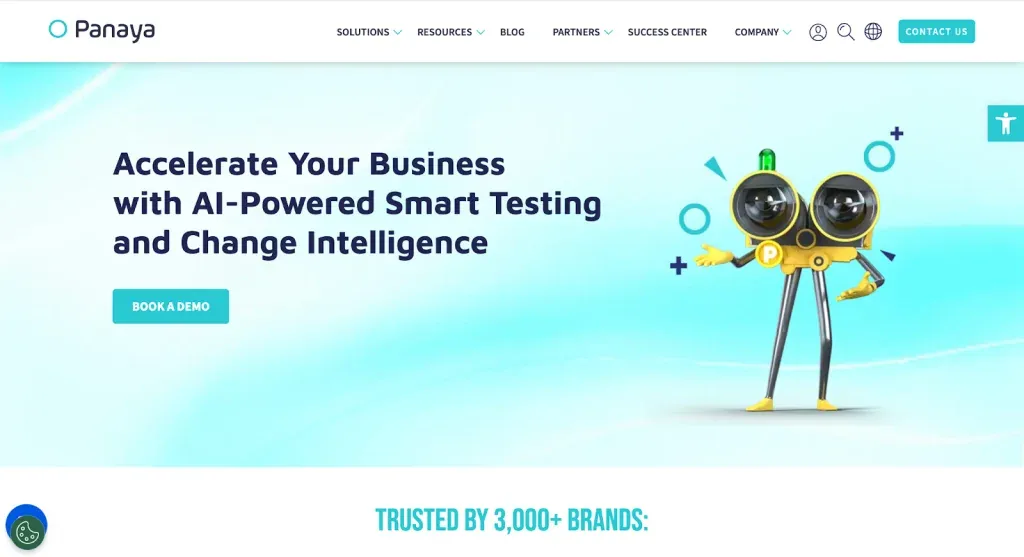
Panaya also verifies that the model understands business-specific terminology, including terms like purchase orders, SKUs, and payment conditions. This ensures that conversational commands produce accurate results within financial, HR, or supply chain workflows.
Best For: Testing conversational AI connected to enterprise ERP systems such as SAP or Oracle.
Standout Feature: Validation of natural language commands that execute complex business workflows.
| Benefits: Why Panaya Fits ERP Testing | Trade-offs: Things to Note |
|---|---|
| Validates NLP commands that trigger complex business workflows | Limited for general chatbot testing outside ERP systems |
| Understands enterprise terminology like PO, SKU, Net 30 | Requires access to SAP/Oracle environments for full testing |
| Ensures critical financial and supply chain commands are accurate | May be overkill for small-scale NLP projects |
| Reduces operational and financial risk in ERP interactions | Less focus on generating diverse linguistic variations |
| Ideal for “Chat with your Data” enterprise use cases | Integration setup can be time-intensive |
4. Opkey
- Founded: 2015
- Headquarters: Dublin, CA
- Key Feature: No-code automation for Enterprise Chatbots and Workflows
- Recognition: #1 rated app on Oracle Cloud Marketplace
- Integration: Support for 14+ Enterprise Apps, including Oracle, Salesforce, Workday
Opkey provides end-to-end testing for conversational AI used inside enterprise applications. The platform validates the full interaction flow, from the user’s natural language request to the backend system query and the final response delivered by the chatbot.
For example, when an employee asks an HR assistant “How many vacation days do I have?”, Opkey verifies that the NLP model interprets the request correctly, retrieves the appropriate data from systems like Workday, and returns the accurate response to the user.
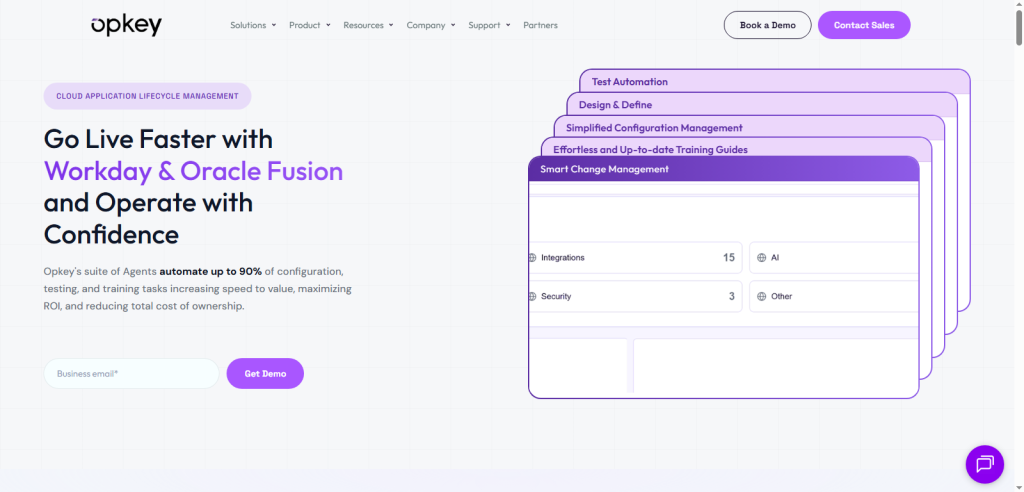
Opkey also offers a library of pre-built test scenarios for common enterprise workflows. These reusable tests allow QA teams to quickly validate chatbot functionality across HR, finance, and IT processes without building test cases from scratch.
Best For: End-to-end testing of enterprise chatbots connected to business applications.
Standout Feature: Pre-built automation tests for conversational workflows across major enterprise platforms.
| Key Advantages: Enterprise Workflow Focus | Considerations: Limitations to Know |
|---|---|
| End-to-end testing from NLP understanding to backend system responses | Primarily designed for enterprise apps; less suited for small chatbot projects |
| Supports 14+ enterprise applications including Oracle, Workday, Salesforce | Pre-built tests may not cover niche workflows |
| Low-code, reusable test libraries save QA time | May require additional configuration for unique business logic |
| Validates conversational flows across HR, Finance, and IT bots | Less emphasis on large-scale generative testing |
| Ensures accurate multi-step enterprise interactions | Learning curve for teams new to low-code automation platforms |
5. Mabl
- Founded: 2017
- Headquarters: Boston, MA
- Key Feature: Unified Chatbot and Web UI testing
- Recognition: 5-time AI Breakthrough Award Winner
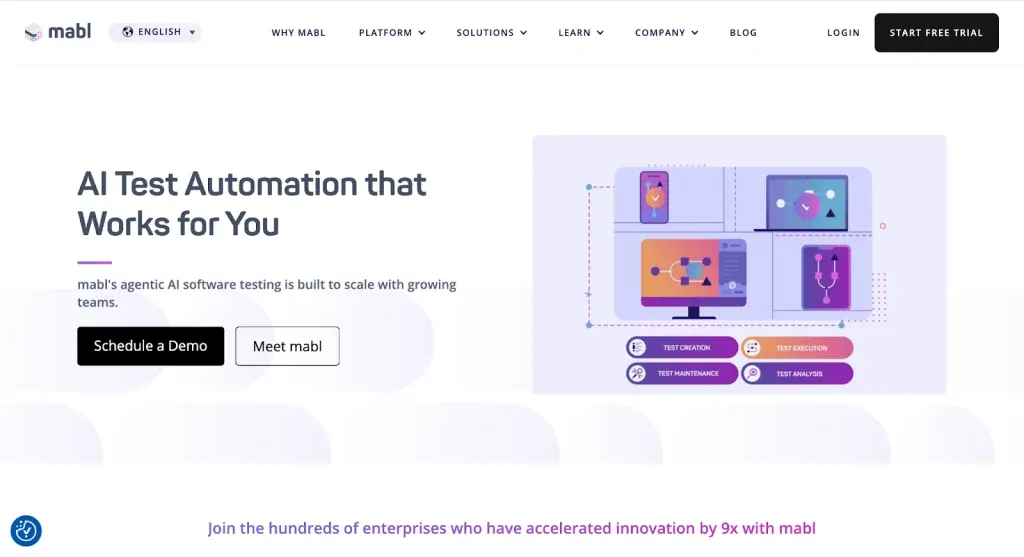
- Capability: Validating that chatbot text responses trigger correct visual UI changes
Mabl’s low-code platform tests this interaction end-to-end, verifying that NLP intent detection aligns with the visual and functional outcomes on the web. This ensures a seamless experience where conversation leads to correct and visible actions.
Best For: Validating both NLP responses and resulting web UI behavior.
Standout Feature: Unified testing of chatbot text responses and application UI actions.
| Advantages: UI & Actionable AI Testing | Potential Drawbacks |
|---|---|
| Tests the link between NLP responses and web UI actions | Focused on web-based applications; not ideal for backend-only testing |
| Low-code platform reduces setup complexity | May require integration with enterprise systems for full coverage |
| Ensures multi-turn conversation results in correct visual outcomes | Limited ERP-specific workflow validation |
| Supports actionable AI scenarios where chatbots perform tasks | Test generation for linguistic variation is less advanced |
| Detects discrepancies between intent detection and UI behavior | Smaller teams may find some advanced features unnecessary |
Factors to Consider When Choosing an NLP Testing Tool
When selecting an NLP testing platform, focus on features that ensure your AI understands users accurately, handles real-world scenarios, and produces reliable outcomes:
- Intent Verification: Confirm the system accurately identifies user intent, reducing the risk of “right answer, wrong reason” errors.
- Data Diversity: Ensure the tool can handle varied phrasing, slang, and typos to simulate real user interactions.
- Business Logic Integration: Check that the platform supports your backend systems and workflows, including ERP, HR, or financial applications.
- Multi-Turn Context: Verify the system maintains context across long or multi-step conversations.
- Hallucination Detection: Look for mechanisms that validate responses against factual data to prevent incorrect or fabricated outputs.
Final Thoughts on Picking the Right NLP Testing Tool
Picking the right NLP testing tool doesn’t have to feel overwhelming. The key is understanding what your AI needs to do, from accurately detecting intents and extracting entities to handling multi-turn conversations and backend workflows.
By focusing on intent verification, test data diversity, business logic integration, context handling, and hallucination detection, you can make sure your conversational AI is reliable, accurate, and ready for real users.
Start small with your critical scenarios, automate testing where possible, and let these platforms help your AI perform confidently in the real world. After all, a chatbot that understands users, and acts correctly, wins every time.