




Key Takeaways
- Understanding your specific trailer type and its storage requirements is the first step toward choosing the right unit size and facility.
- HOA restrictions and municipal parking codes make off-site storage a practical necessity for a large and growing share of RV and trailer owners.
- Enclosed storage provides the strongest protection for long-term storage, while covered and outdoor options serve frequent users with tighter budgets.
- Trailer-specific concerns such as fifth-wheel kingpin support, tire inflation, and level parking surfaces require attention before and during storage.
- Seasonal planning and proper preparation before drop-off protect both the vehicle and your storage budget over the long term.
Owning an RV or trailer is one of the best ways to take control of your travel experience. But when the adventure is over, you need a practical, reliable place to park and store your vehicle until the next trip. RV and trailer parking storage is a broad category that covers everything from simple outdoor lots to fully enclosed private units.
This handbook walks you through the full landscape, the types of trailers that need storage, the options available, what to look for in a facility, and how to keep your investment in peak condition between uses.
Understanding The Range Of RVs And Trailers That Need Storage
The term ‘trailer’ covers a wide spectrum of recreational and utility vehicles, each with its own storage requirements. Knowing which category your vehicle falls into helps you identify the right RV and trailer parking storage solution.
| Vehicle Type | Typical Length | Storage Consideration |
| Class A Motorhome | 30–45 ft | Requires tall clearance; enclosed preferred |
| Class B Van Camper | 18–24 ft | Fits most standard covered spaces |
| Class C Motorhome | 20–35 ft | Mid-size; covered or enclosed works well |
| Fifth-Wheel Trailer | 22–40 ft | Requires kingpin clearance; tall units needed |
| Travel Trailer | 12–35 ft | Most versatile; fits outdoor, covered, enclosed |
| Toy Hauler | 24–42 ft | Heavy rear section; needs level, stable surface |
| Cargo / Utility Trailer | 8–24 ft | Often stored in smaller covered or open lots |
| Airstream / Aluminum Trailer | 16–34 ft | Benefits from covered storage to protect finish |
The Three Core Storage Options Explained
Whether you are storing a Class A motorhome or a compact travel trailer, the same three foundational storage options apply across most facilities in the country.
Open Lot / Outdoor Parking
Outdoor parking is the entry-level storage option and the most widely available. Vehicles are stored on a paved or gravel lot within a fenced and gated facility. While there is no overhead protection, a quality facility provides robust perimeter security, surveillance cameras, and electronic gate access. This option is practical for owners who use their vehicles frequently and are willing to use a quality cover for weather protection.
Covered Parking / Canopy Units
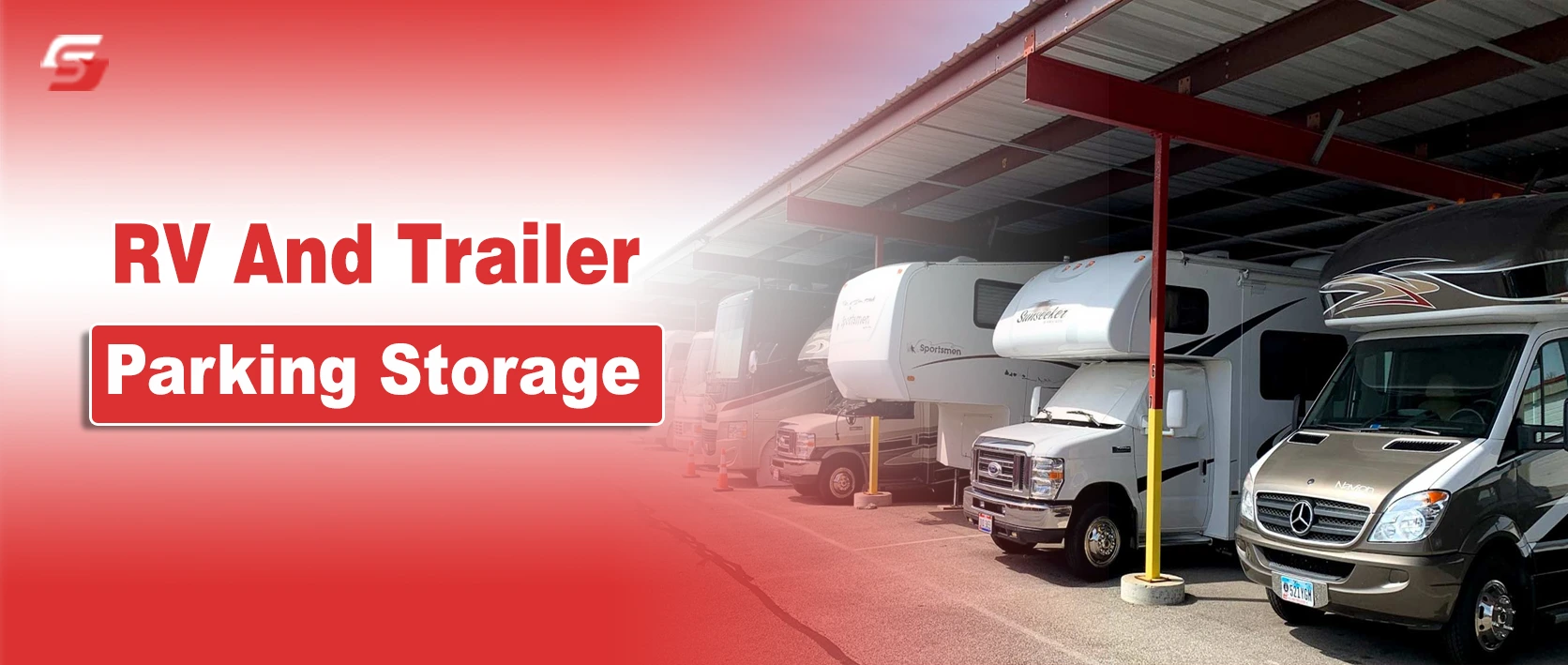
Covered units sit under a permanent canopy or carport structure, providing an overhead barrier against sun, rain, and hail. The sides remain open, which means the space benefits from natural ventilation while still blocking most weather events. Covered storage is the most popular choice for owners who want a meaningful step up from outdoor parking without the full investment in an enclosed unit.
Enclosed Indoor Units
Enclosed storage provides the highest level of protection available at a land-based storage facility. Your vehicle is housed inside a fully enclosed structure with doors, solid walls, and a weatherproof roof. Some enclosed units include electricity, making it possible to run battery maintainers, interior fans, or dehumidifiers during long storage periods.
Enclosed storage is especially valuable for high-value vehicles, those stored for extended periods, and owners in regions prone to severe weather.
Key Questions To Ask Before Choosing A Storage Facility
Not every facility is built to handle the range of vehicles that fall under the RV and trailer category. These questions will help you evaluate whether a facility is truly equipped for your needs.
- What is the maximum vehicle length and height you can accommodate?
- Are drive aisles wide enough for me to maneuver my specific trailer type?
- What are the exact hours of access, and is extended or 24-hour access available?
- What security systems are in place, cameras, lighting, gate access logging?
- Do enclosed units have electricity available?
- Is there a dump station or wash station on the property?
- What are the lease terms, month-to-month or annual?
- What documentation is required at move-in?
HOA Rules And Municipal Codes: Why Off-Site Storage Is Often Necessary
A growing number of residential communities in Texas and across the country maintain regulations that restrict or prohibit the on-property parking of oversized vehicles. These rules are enforced by homeowners associations, municipal codes, or both.
Common Residential Restrictions
- Prohibition on parking trailers in driveways for more than 24–72 hours
- Height restrictions on vehicles visible from the street
- Setback requirements that prevent parking within a certain distance of the property line
- Complete bans on recreational vehicles in residential zones
How Storage Facilities Solve The Problem
A dedicated RV and trailer storage facility gives you a compliant, permanent off-site home for your vehicle. You maintain full ownership and access without risking HOA fines, neighborhood disputes, or municipal citations. Many storage facilities are located near residential communities specifically to serve this need.
Seasonal Storage Strategy For RV And Trailer Owners
Timing your storage arrangement strategically can save money and ensure your vehicle is always ready when you need it.
Peak Season Planning
If you use your RV or trailer heavily during spring and summer, you may only need storage from late fall through early spring. Book your space ahead of the off-season, storage facilities in high-demand areas fill up quickly during fall as owners prepare for winter.
Year-Round Storage Benefits
Year-round storage arrangements typically come with simplified billing and often better rates than seasonal contracts. If your HOA restrictions apply regardless of season or you simply do not have the driveway space, year-round storage eliminates the logistical back-and-forth entirely.
Preparing For The Off-Season
- Complete all exterior cleaning before storing to prevent staining and oxidation
- Winterize water systems, drain tanks, blow out lines, and add antifreeze where required
- Place moisture-absorbing products inside the vehicle to prevent mold during storage
- Cover tires to protect against UV cracking
- Document the vehicle’s condition with photos at drop-off
Trailer-Specific Storage Considerations
Trailers present unique storage challenges that differ from self-propelled motorhomes. These considerations are worth addressing before you choose a facility.
Fifth-Wheel Kingpin Support
When storing a fifth-wheel without it attached to a truck, the front kingpin section must be supported properly to prevent frame stress. Ensure the facility surface is stable and level and that you use a quality fifth-wheel support stand at the front pin box.
Tongue Jack And Leveling
Travel trailers and toy haulers should be stored level to prevent water pooling, uneven tire wear, and stress on the frame. Use a tongue jack and leveling blocks to achieve a stable, balanced position at your storage space.
Tire Maintenance During Storage
Trailer tires are particularly susceptible to flat-spotting during extended storage. Inflate tires slightly above the manufacturer’s recommended PSI to compensate for gradual air loss, and consider placing tire cradles under each wheel to distribute weight evenly and prevent flat-spot development.
Conclusion
RV and trailer storage does not have to be complicated, but it does require the right approach to protect your vehicle, stay compliant with local regulations, and make every departure as smooth as possible. Taking the time to choose a well-equipped facility, prepare your vehicle properly, and plan your storage schedule around your travel habits pays off every time you hit the road. With the right storage setup in place, your trailer or motorhome stays in peak condition and ready for wherever the next trip takes you.
Frequently Asked Questions
Can I store a toy hauler at a standard RV storage facility?
Yes, provided the facility has spaces large enough to accommodate your toy hauler’s length, width, and height. Toy haulers with heavy rear-loading ramps also benefit from a firm, level storage surface. Confirm these specifics with the facility before signing your lease.
What is the best way to prevent tire damage during long-term trailer storage?
Inflate tires slightly above the standard PSI to compensate for slow air loss during storage. Use tire covers to block UV exposure, which causes sidewall cracking over time. Tire cradles or flat-stop pads help distribute weight evenly and reduce flat-spot formation on standing tires.
Do I need to maintain registration on a trailer while it is in storage?
Requirements vary by state. In Texas, trailers generally must maintain current registration. Some storage facilities require proof of current registration as a condition of your lease agreement. Check with your local county tax office for the specific rules applicable to your trailer type.
How do I prevent mold and mildew inside my RV during storage?
Before storing, clean and thoroughly dry all interior surfaces, empty the refrigerator and leave its door propped open, and place moisture-absorbing products throughout the interior. If your storage unit has electricity, a small dehumidifier running on a timer can maintain low interior humidity levels throughout the storage period.
Is it safe to store a propane-equipped trailer in an enclosed storage unit?
Most enclosed storage facilities require that propane valves be closed and systems turned off before storage. Some facilities have specific policies about the amount of propane allowed in enclosed units. Always turn off all propane appliances and close the supply valve at the tank before placing your trailer in any indoor storage environment.