




Key Takeaways
- Broadcom’s VMware changes have increased costs and complexity, pushing CIOs to explore alternatives with simpler licensing and predictable pricing.
- High availability doesn’t require VMware’s overhead — modern platforms deliver resilience, integrated security, and streamlined operations without lock-in.
- Strong alternatives exist across different needs — from Sangfor HCI, Microsoft Hyper-V, Nutanix AHV, Red Hat OpenShift, Proxmox VE, Scale Computing, to Oracle Linux KVM — each offering unique strengths for enterprises, SMBs, DevOps teams, and edge deployments.
- 2026 is decision time — businesses can either accept rising VMware renewals or pivot to solutions that keep costs sane, simplify management, and support growth.
If VMware renewals suddenly feel like surprise exams (with a 3x fee spike), you’re not alone. Plenty of CIOs started 2026 with audits, calculators, and a headache.
It’s happening all thanks to per‑core subscriptions, 72‑core minimums per host, and bundles that pull in features you don’t even need. The shift started back in 2023 when Broadcom acquired VMware. It’s frustrating. But it’s also the nudge many teams needed to explore what else is out there.
This guide is built for leaders who want predictable costs, streamlined operations, and built-in security — without sacrificing performance. I have listed the top 7 VMware alternatives to help you make the right choice and switch smoothly.
7 VMware Alternatives that Keep Licensing Simple
Go through this comprehensive guide to learn about VMware alternatives that don’t make it complex for users.
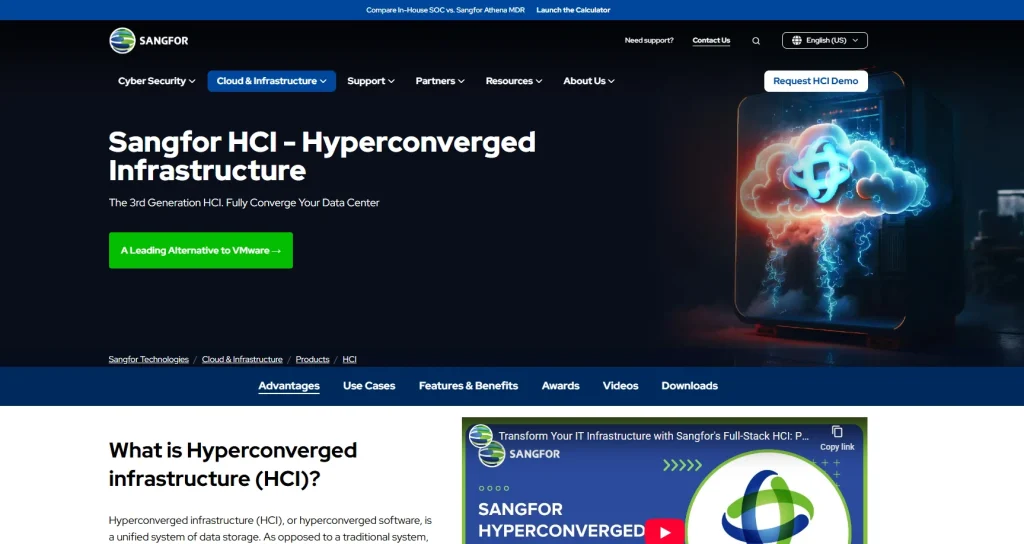
1) Sangfor HCI
Sangfor is one of the best VMware alternatives alongside Nutanix, Microsoft Hyper-V, Proxmox VE, and so on, according to G2. Here’s why it’s among the top server virtualization software among enterprises:
Sangfor comes with security integrated into the virtualization platform (Sangfor HCI). Plus users enjoy unified operations, simpler licensing, and practical solutions.
Here are more details about how Sangfor HCI helps enterprises as well as SMBs:
- Integrated Native Security (aSEC): Sangfor HCI features a built-in aSEC security center that merges security with infrastructure. It provides full visibility and protection, from the perimeter to micro-segmentation, with native features like real-time ransomware prevention, vulnerability repair, and distributed IPS.
- Unified operations: aSV + aSAN + HTML5 console = fewer tools, fewer gaps.
- Pricing sanity: socket‑based, no per‑core shock.
- Practical DR: three nodes are enough; weekend migrations are common.
Sangfor HCI is a VMware alternative that brings integrated security and cost control. Sangfor HCI solves VMware licensing issues by offering flexible and cost‑effective pricing, no forced bundles, and no lock‑in spiral.
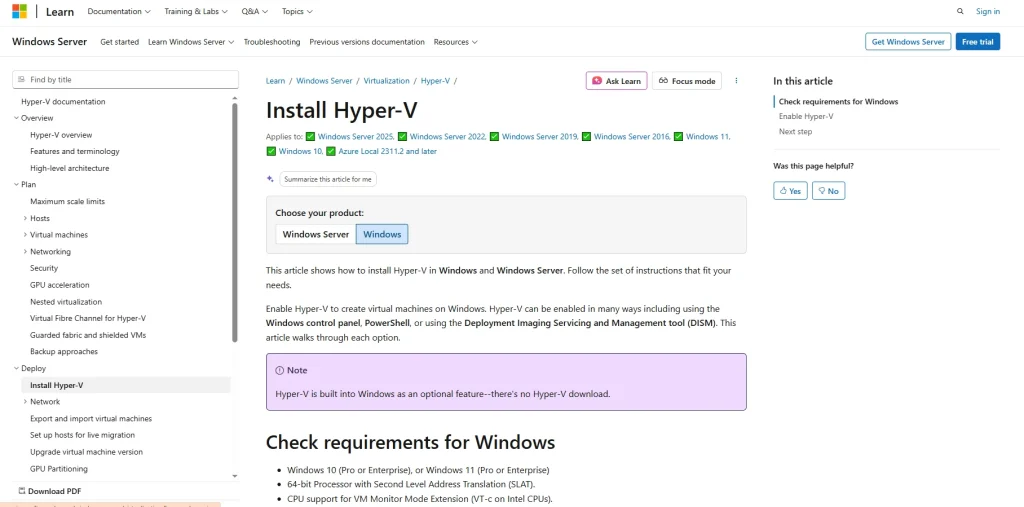
2) Microsoft Hyper‑V
Best for: Enterprises deep in the Microsoft ecosystem.
Why it works: If you already run Windows Server and Active Directory, Hyper‑V slots in neatly. Azure integration helps with hybrid setups where backup, DR, and cloud bursting feel natural.
The licensing model is familiar, capacity planning is predictable, and you don’t get hammered by per‑core minimums. For many Windows shops, Hyper‑V is the “lowest‑friction” path away from VMware.
Key Benefits:
- Strong VM management via Windows Admin Center.
- Mature ecosystem and skills in most IT teams.
- Clean path to Azure for hybrid and DR.
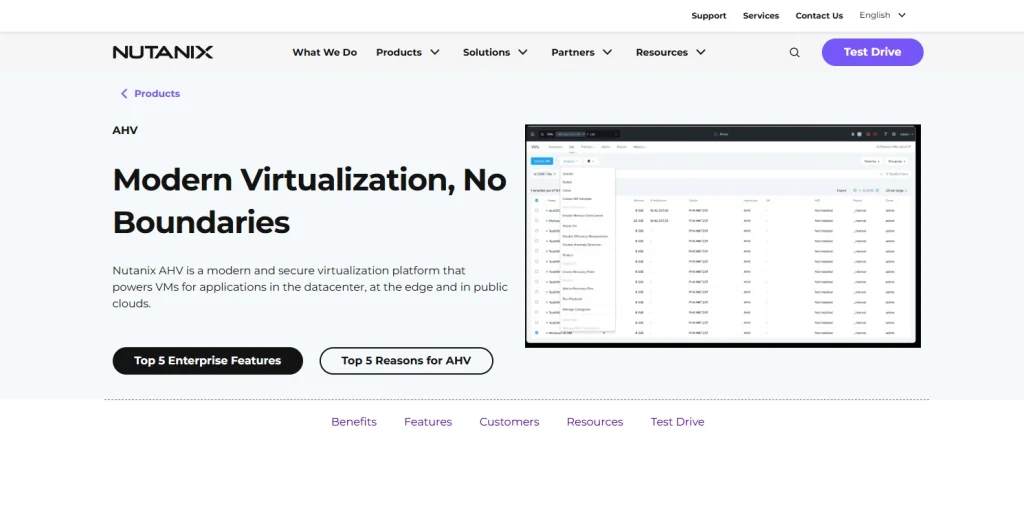
3) Nutanix AHV
Best for: Teams leaning into HCI and self‑healing clusters.
Why it works: Nutanix AHV is tightly integrated with its storage and networking, so you get resilience and simpler ops. The Prism console is a joy, with single‑pane views, clear performance charts, and fewer moving parts.
If you’ve struggled with juggling separate tools for compute, storage, and backups, AHV reduces that complexity dramatically.
Key Benefits:
- Robust performance at scale.
- Transparent management and automation.
- Less “tool sprawl” compared to legacy stacks.
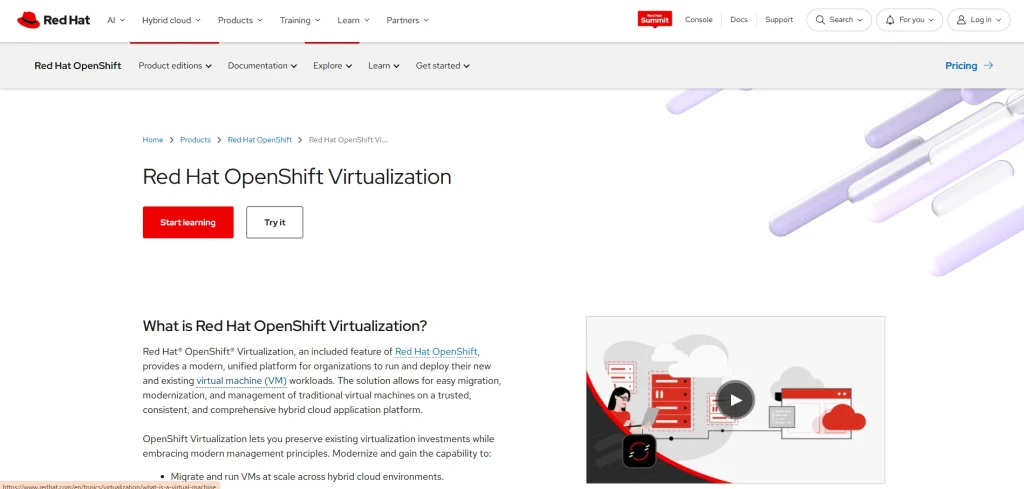
4) Red Hat OpenShift Virtualization
Best for: DevOps-heavy teams that want containers and VMs together.
Why it works: You can run VMs and containers side by side, with GitOps automation and policy‑driven deployments. If your roadmap includes Kubernetes, microservices, and CI/CD pipelines, this route keeps your platform modern while preserving legacy workloads during the transition.
Key Benefits:
- Strong automation and policy control.
- Cloud‑native security patterns.
- Developer‑friendly and ops‑savvy at once.
5) Proxmox VE
Best for: SMBs and cost‑conscious IT teams.
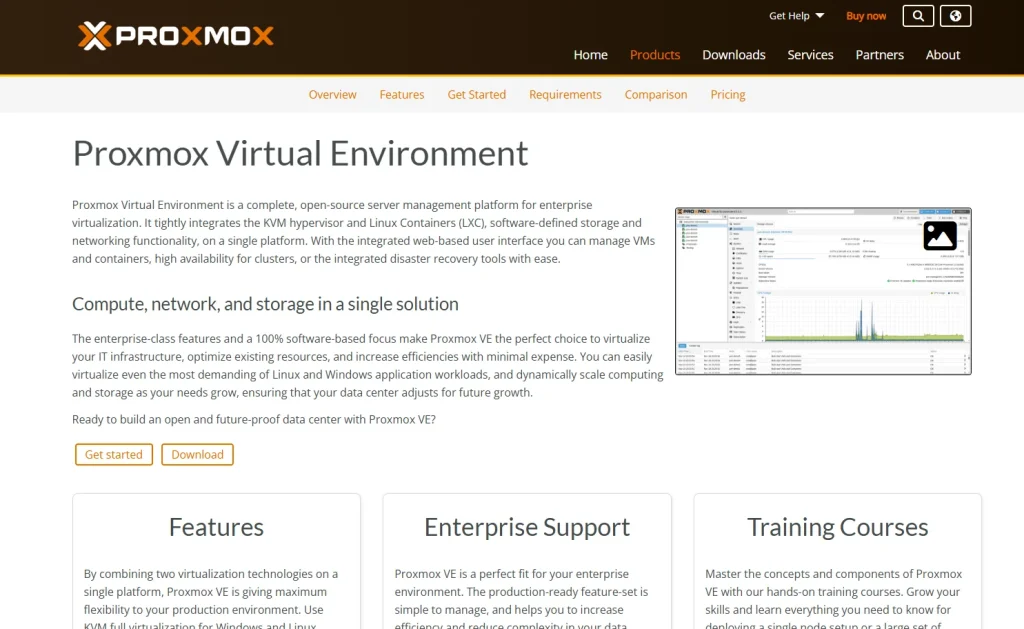
Why it works: Proxmox VE blends KVM virtualization with LXC containers and ZFS storage. Additionally, it’s open-source, the web GUI is simple, and the community is huge. Many small retailers run 10–20 hosts on Proxmox without drama, clean backups, fast restore, and enough features for most needs.
Key Benefits:
- Minimal licensing costs.
- Solid snapshot and replication features.
- Scales from 5 to 50 nodes comfortably.
6) Scale Computing Platform
Best for: Edge deployments and branch locations.
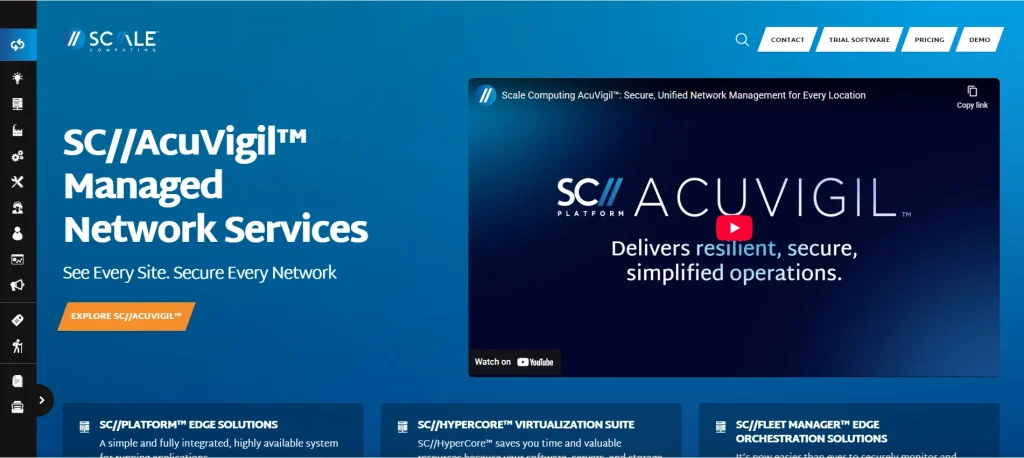
Why it works: Scale Computing focuses on self‑healing and zero‑touch operations at the edge.
If you’ve got dozens (or hundreds) of sites that shouldn’t need a PhD to manage, this is an elegant fit. Branch updates, DR, and local performance are all streamlined.
Key Benefits:
- Low‑touch administration for remote sites.
- Reliable DR in small footprints.
- Great for retail, manufacturing, and logistics.
7) Oracle Linux KVM
Best for: Teams that prefer open‑source roots with enterprise support.
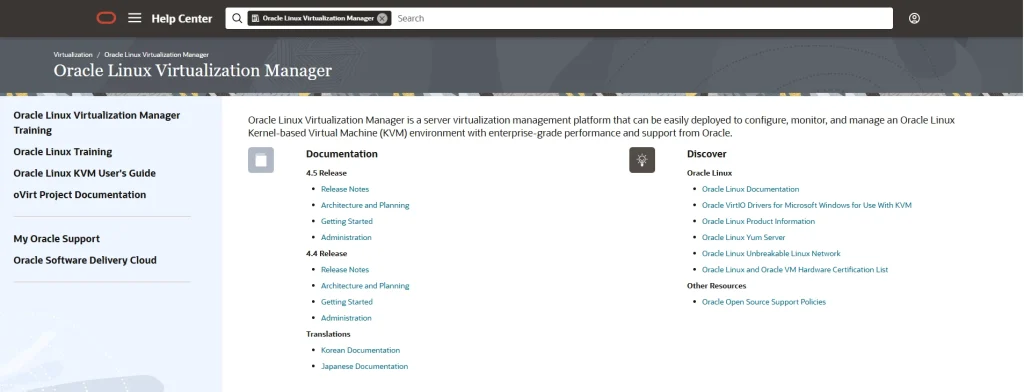
Why it works: KVM on Oracle Linux gives you a stable hypervisor with familiar tooling and performance. If your stack includes Oracle databases or middleware, alignment can simplify support conversations and reduce finger‑pointing.
Key Benefits:
- Mature hypervisor foundation.
- Straightforward performance tuning.
- Enterprise support options.
What is the Best Option?
Any of the VMware alternatives from Sangfor to Oracle Linux KVM are among the best solutions to consider in 2026. However, thanks to Sangfor’s VMware-like architecture, perpetual licensing, and transparent pricing, it tops the list. Additionally, Sangfor is recognized by Gartner and G2 as one of the best names to have transparent licensing alongside VMware-like architecture.
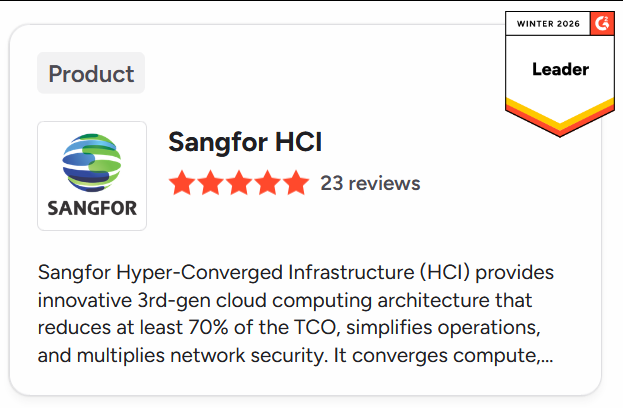
Sangfor HCI keeps showing up on CIO shortlists, and for good reason. It’s a complete package: virtualization, storage, networking, and security, all in one stack. There’s no need to juggle vendors, no messy add-ons.
Additionally, the aSV hypervisor gives you enterprise features like smart load balancing and GPU support without the premium price.
What about Storage? Well, the aSAN handles auto-tiering and data protection effortlessly. Management is simple with a clean HTML5 console. Most importantly, security isn’t an afterthought with Sangfor. It’s built in.
You get Athena NGFW for advanced firewalling, EPP for endpoint safety, SWG for secure browsing, NDR for threat detection, and SASE for zero-trust access. Additionally, if you’re thinking of a VMware migration, Sangfor makes it easy and hassle-free.
Decision Time!
2026 is decision time. You can accept rising costs and rigid bundles, or re‑evaluate with platforms designed for hybrid, edge, and modern security. The good news? Alternatives have matured. Whether you’re an Azure‑centric shop, a Kubernetes‑first team, or a cost‑aware SMB, there’s a path that won’t wreck your week or your budget.
And if you’re weighing integrated security and simple pricing, Sangfor HCI is the best VMware competitor to prototype. Start small. Run a POC. Kick the tires on Athena XDR correlations, try Athena SASE for zero‑trust access, and see how aSAN handles your storage quirks. If the numbers (and nights of sleep) look better, you’ll know.