





2026 is approaching, and Artificial Intelligence language models have gone from experimental projects to the backbone of real business operations. Chatbots handle customer inquiries, GenAI agents draft legal documents, and conversational interfaces power enterprise workflows.
But here’s the catch: these systems can hallucinate facts, misread intent, or return biased responses. Traditional testing methods that rely on scripts and predefined paths simply can’t keep up with the infinite ways people express themselves. You need smarter tools, ones that use AI to test AI.
This guide provides you with five platforms that go beyond basic text matching. They validate intent accuracy, generate thousands of conversational variations, and make sure your chatbot doesn’t accidentally trigger a million-dollar purchase order in your ERP system.
Let’s break down what makes these tools different and how they can help your team ship safer, smarter AI products.
How to Select Top NLP Testing Providers?
We chose these five platforms based on their ability to validate Natural Language Understanding (NLU) at scale. All data reflects capabilities as of late 2025. Here’s what we looked for:
- Generative Testing: Platforms like Functionize use GenAI to create diverse, realistic user inputs automatically.
- End-to-End Validation: Tools such as Mabl verify that text inputs trigger the correct backend actions.
- Enterprise Context: Solutions like Panaya and Opkey understand business logic in SAP or Oracle environments.
- API Verification: Platforms like ACCELQ validate intent confidence scores and entity extraction.
- Scalability: The ability to run thousands of conversational permutations automatically.
These aren’t tools that just check if your bot “said something.” They verify that it was understood correctly and acted appropriately.
Top 5 Best NLP Testing Providers to Try Once
Here are the five platforms we’re covering:
1. Functionize
- Founded: 2014
- Headquarters: San Francisco, CA
- Key Feature: “testGPT” generative AI for creating natural language test cases
- Recognition: “Best Corporate Innovation in AI” (AIconics)
- Core Tech: NLP-driven test creation from plain English descriptions
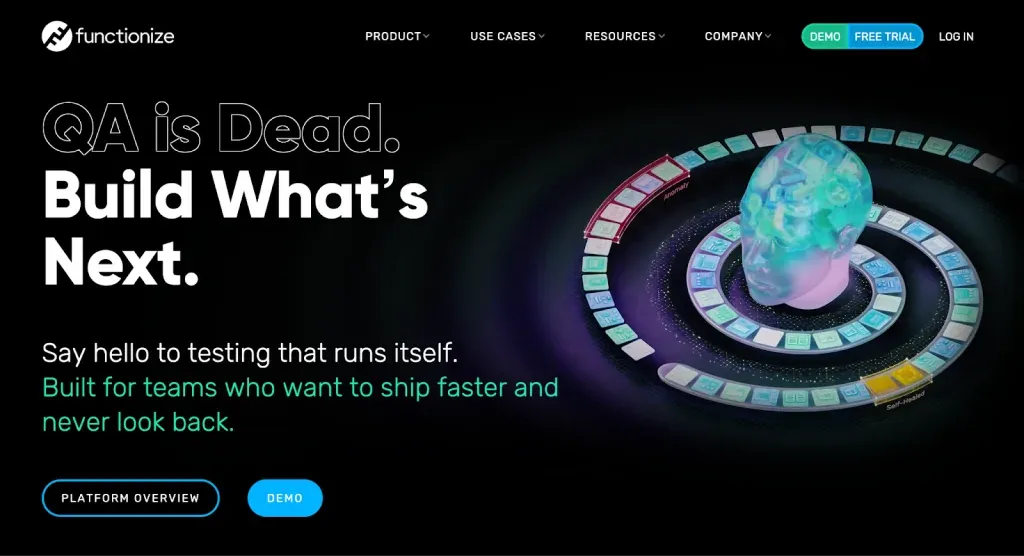
Functionize leads the way in using GenAI to test GenAI. Its “testGPT” capability generates massive datasets of natural language inputs, everything from slang and typos to complex, multi-clause sentences. This matters because real users don’t type perfect requests.
They say things like “umm, can u help me return this?” or “I need the thingy from last week.” By simulating this chaotic reality, Functionize helps you stress-test your models against the full spectrum of human expression. The platform makes it easy to create thousands of test variations without writing a single line of code.
- Best For: Generating diverse, realistic natural language training and testing data.
- Standout Feature: Generative AI that automatically creates thousands of linguistic test variations.
2. ACCELQ
- Founded: 2014
- Headquarters: Dallas, TX
- Key Feature: Codeless API validation for NLP backends (Intents/Entities)
- Recognition: Gartner Magic Quadrant Leader
- Architecture: Unified platform for validating Chatbot logic and API responses
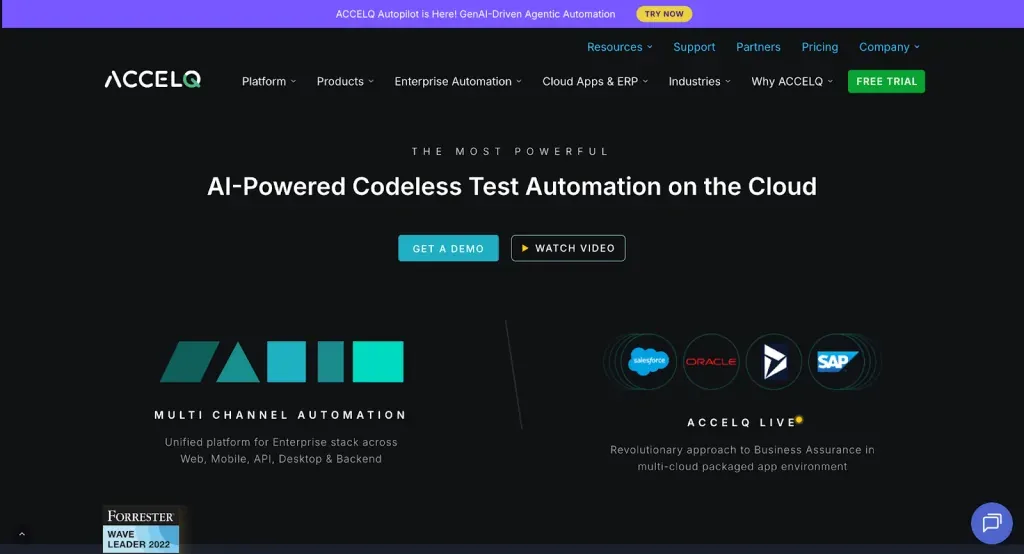
ACCELQ takes a scientific approach by validating the “brain” of your chatbot. Instead of just checking what the bot says, it connects directly to the NLP engine’s API. It verifies that user inputs map to the correct “Intents” and “Entities” with high confidence scores.
Think of it this way: if a user says “Cancel my order,” ACCELQ confirms the engine classified it as a “CancelOrder” intent with, say, 92% confidence, not as “CheckOrderStatus” with 48% confidence. This prevents the dangerous scenario where your bot gets the right answer for the wrong reason.
- Best For: Validating the structured API logic (Intents, Confidence Scores) behind chatbots.
- Standout Feature: Codeless validation of JSON responses from NLP engines like Dialogflow/Lex.
3. Panaya
- Founded: 2006
- Headquarters: Hod HaSharon, Israel / Hackensack, NJ
- Key Feature: Testing conversational interfaces for SAP/Oracle ERPs
- Recognition: QA Vector “User Experience Testing Vendor of the Year”
- Core Tech: Ensuring natural language queries trigger accurate business transactions
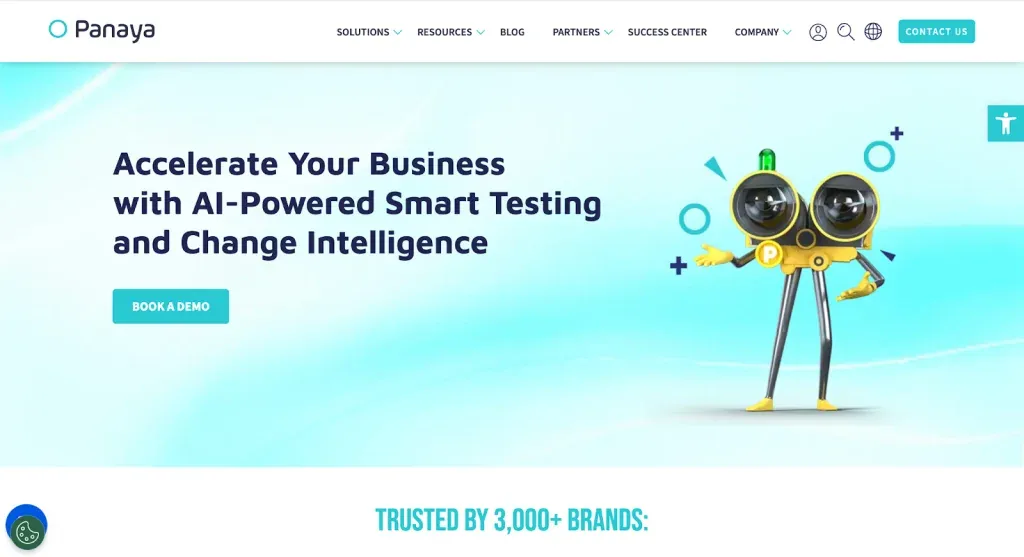
Panaya operates at the intersection of NLP and Enterprise Resource Planning (ERP). As companies roll out “Chat with your Data” features, they need to know that a command like “Create a sales order for Acme Corp” actually results in a valid transaction in SAP or Oracle.
Panaya validates this entire chain. It checks that the NLP model correctly interprets business-specific terminology (like “PO,” “SKU,” or “Net 30”) and then executes the right complex workflow in the ERP backend. This is non-negotiable for finance and supply chain applications where errors cost real money.
- Best For: Testing conversational AI overlays on complex ERP systems (SAP/Oracle).
- Standout Feature: Validating that natural language commands execute accurate business workflows.
4. Opkey
- Founded: 2015
- Headquarters: Dublin, CA
- Key Feature: No-code automation for Enterprise Chatbots and Workflows
- Recognition: #1 rated app on Oracle Cloud Marketplace
- Integration: Support for 14+ Enterprise Apps, including Oracle, Salesforce, Workday
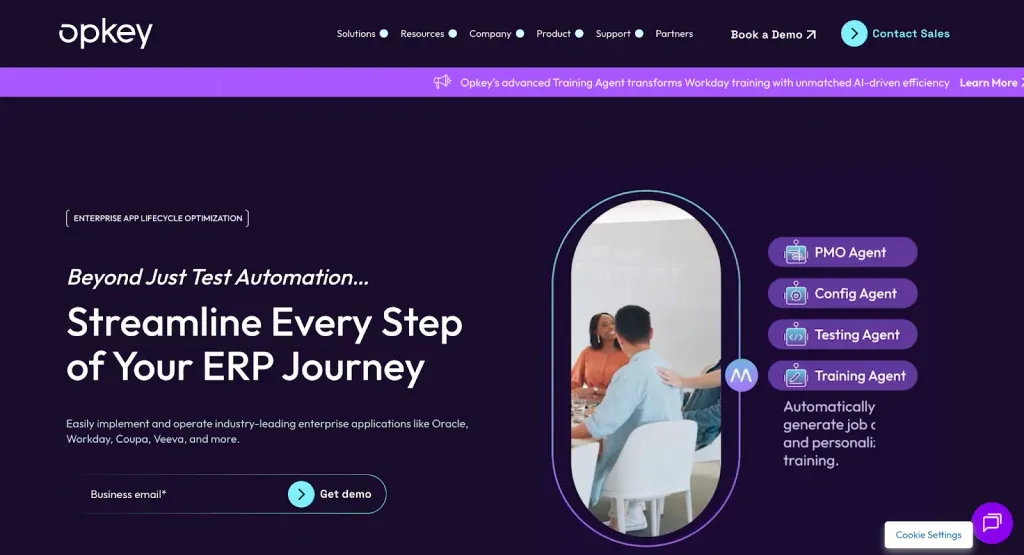
Opkey specializes in end-to-end testing for enterprise chatbots. Picture an employee asking an HR bot, “How many vacation days do I have?” Opkey validates the entire chain: the NLP understanding, the query sent to the Workday database, and the final text response delivered back to the user.
Its library of pre-built tests speeds up validation for common conversational workflows across major enterprise platforms. This means your QA team isn’t starting from scratch every time you add a new chatbot capability.
- Best For: End-to-end testing of internal enterprise chatbots (HR, IT, Finance).
- Standout Feature: Pre-built test libraries for validating conversational flows in Workday/Oracle.
5. Mabl
- Founded: 2017
- Headquarters: Boston, MA
- Key Feature: Unified Chatbot and Web UI testing
- Recognition: 5-time AI Breakthrough Award Winner
- Capability: Validating that chatbot text responses trigger correct visual UI changes
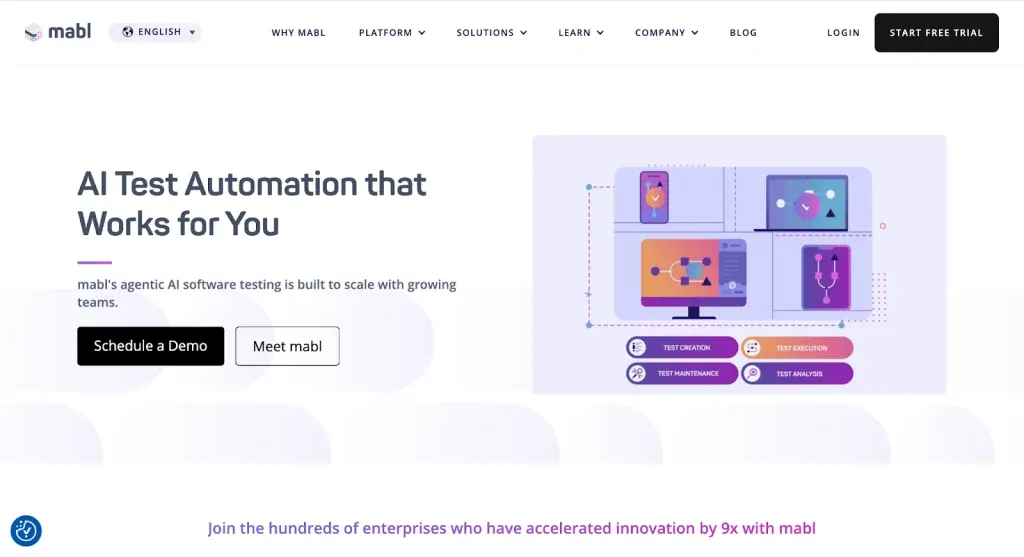
Mabl focuses on what we call “Actionable AI.” Modern chatbots don’t just talk, they do things. A user might say, “Refund my last purchase,” and the chatbot should not only respond with “Sure, I’ll process that,” but also pop up a refund confirmation modal on the web page.
Mabl’s low-code platform tests this synergy. It verifies that when the NLP model detects an intent, the web application’s UI responds correctly. This guarantees a smooth experience where conversation leads to visible, functional outcomes.
- Best For: Testing the visual and functional outcomes of chatbot interactions on the web.
- Standout Feature: Unified validation of NLP text responses and resulting UI actions.
Factors to Consider When Choosing an NLP Testing Tool
1. Intent Verification
Does the tool just check the text response, or does it verify the underlying “Intent” classification? Verifying the intent prevents “lucky guesses.” A bot might return the right answer accidentally, but if the intent confidence is low, it’s a red flag. ACCELQ excels here by validating API-level intent data.
2. Test Data Diversity
You need thousands of phrasing variations to train and test an NLP model properly. People say the same thing in countless ways. Tools with GenAI capabilities (like Functionize) can generate this data for you automatically, saving weeks of manual test-case writing and making your model more resilient.
3. Business Logic Integration
If your AI touches financial data, HR records, or supply chain systems, the testing tool must understand the underlying business system, not just the chat window. Opkey and Panaya both connect deeply with enterprise apps like SAP and Workday, validating that conversational commands trigger correct transactions.
4. Multi-Turn Context
Make sure the tool can test long conversations where context matters. If a user says “Book it for Friday” after asking “Can I reserve a conference room?”, the system needs to remember that “it” refers to the room. Your testing platform should verify that this context carries across multiple turns.
5. Hallucination Detection
Look for features that validate factual accuracy against a ground truth. AI models can confidently say completely wrong things. If your chatbot cites company policies or pricing, you need automated checks that compare the response to the actual policy document or price list.
Final Thoughts
Trust will separate successful AI products from abandoned ones when we come along in 2026. Users will drop a chatbot that hallucinates facts or misunderstands basic requests. Start by mapping your “critical conversations,” the top 10 things your users ask most often. Automate the testing of those intents first.
NLP testing is never “done.” Language changes, new slang emerges, and user expectations shift. Your testing strategy must adapt continuously. The five platforms profiled here give you the technical foundation to keep pace. Use them to validate intent, generate realistic test data, and ensure your AI models are accurate, safe, and ready for production.