




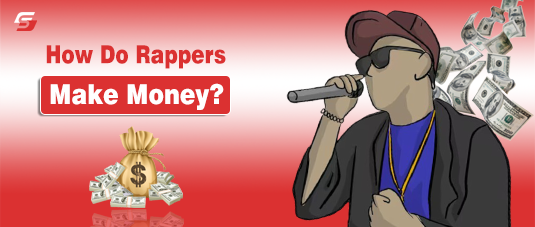
Rappers are celebrities who have more fan following than other musicians due to their unique style and vocals. We often see them showcasing an extraordinary and luxurious lifestyle, private jets, designer clothes, and multi-million dollar mansions.
As a fan, a question often comes to mind: “How do rappers make money?” Do they just earn through selling songs and concerts, or are there other sources?
The truth is, they go far beyond album sales or concerts. Rappers make money through business ventures, licensing, brand endorsements, streaming, and much more. Artists like 50 Cent, Cardi B, Snoop Dogg, and Post Malone have built massive fortunes that go well beyond their music catalogs.
They do not only make money through album sales or concerts. They go beyond these and make money through business ventures, licensing, brand endorsement, and more.
Now, I am going to break down the ways that help rappers make money.
Ways Rappers Make Money
1. Music Sales and Streaming
2. Live Performances and Tours
3. Merchandise sales
4. Brand Endorsements and Sponsorships
5. Record Deals and Advances
6. Publishing and Songwriting
7. YouTube and Social Media Monetization
8. Business Ventures
9. Licensing Music for Films, TV & Games
10. NFTs, Masters Ownership & New-Age Revenue
10 Ways Through Which Rappers Make Money
1. Music sales and streaming
Music sales and streaming are one of the major sources for rappers to earn money. If we look back, artists like rappers only earned through selling CDs, vinyl, or digital downloads, but today most income comes from streaming platforms like Spotify, Apple Music, and YouTube.
The rapper earns a small amount of money (royalties) every time a song is listened to. For example, Spotify pays artists about $0.003 to $0.005 per stream, meaning a rapper needs around 200,000 streams to make about $1,000.
Note that Spotify also now requires a song to hit at least 1,000 streams per year before any payout begins. For example, Spotify pays artists about $0.003 to $0.005 per stream.
2. Live performances and tours
Live show performances and concerts are one of the biggest money-makers for rappers. They earn from ticket sales and event organizers when they perform at concerts, festivals, or international tours. Famous rappers earn a significant portion through ticket sales percentages, guarantees, and backend deals.
Rick Ross is a great example, he earns hundreds of thousands of dollars for a single show. Bad Bunny took touring to another level entirely; his Most Wanted Tour grossed over $300 million, making it one of the highest-grossing tours in history.
Even newer artists like Rod Wave and Jelly Roll consistently sell out arenas, demonstrating that a loyal fanbase translates directly into touring income.
3. Merchandise sales
Merchandise sales also contribute to a rapper’s income. Yes, they make money through merchandise items like T-shirts, hoodies, hats, and accessories with their name, logo, or album artwork on them. Their fans love to buy merch to show support for their favorite artists, especially at concerts and online stores.
Some artists even take it further and launch their own full-scale brands. Tom MacDonald is a standout example of an independent artist who has built a thriving merch business directly with his fanbase, without relying on a major label.
4. Brand endorsements and sponsorships
Brands and larger organizations collaborate with artists who have a fan following and influence to promote their products or services. Rappers charge a large amount of money to promote their goods or services.
For example, Offset has built a strong luxury fashion presence through deals with Balenciaga and other high-end brands. Even pop-adjacent artists like Shakira and Ariana Grande have landed massive endorsement contracts worth tens of millions.
5. Record deals and advances
Many rappers sign record deals with music labels, which can be a big source of income. When a rapper signs a deal, the label often gives them an advance payment, which is like a loan paid upfront so the artist can record music, shoot videos, and promote their work. The rapper can use this money right away, but it has to be paid back through future album sales and streams.
When Lil Wayne signed with Cash Money Records, he received between $400 million and $500 million total, according to Cash Money co-founder Birdman. Diddy built his fortune partly through understanding the record label business from both sides, as an artist and as a label founder with Bad Boy Records.
6. Publishing and songwriting
Publishing and songwriting are often the “behind-the-scenes” ways rappers make money, but they can be very profitable. They earn through two ways, such as direct deals or publishing royalties.
Some rappers not only write for themselves but also for other artists, known as ghostwriting. It’s been widely discussed that artists like Jay-Z and Kendrick Lamar wrote verses for other artists early in their careers. Clive Davis, one of the most powerful figures in the music industry, has long emphasized that owning publishing rights is where generational wealth is truly built in music.
Legends like Smokey Robinson, Carly Simon, and James Taylor built enduring net worth precisely through songwriting royalties that continue paying decades after the songs were written, a lesson modern rappers are increasingly learning.
7. YouTube and social media monetization
YouTube and social media have opened new doors for rappers to make money without depending only on record labels. On YouTube, rappers earn through ad revenue when fans watch their music videos. Channels with millions of views can bring in a steady income every month.
For example, a viral hit like Lil Nas X’s “Old Town Road” made a fortune not just from sales but also from YouTube plays. NBA YoungBoy is one of the best examples of this model, with billions of YouTube views as an independent artist, he generates significant ad revenue without a major label taking a cut. Billie Eilish and Olivia Rodrigo have also leveraged YouTube and social platforms masterfully to build their brands and income streams.
Social media platforms like Instagram, TikTok, and X (Twitter) also help rappers earn through sponsored posts, paid promotions, or TikTok Creator Fund and Instagram Reels bonuses.
Some rappers even use subscription platforms like Patreon or OnlyFans to give fans exclusive content and earn extra cash. Sukihana is a prime example of a rapper who built her brand almost entirely through social media virality before mainstream recognition.
8. Business ventures
Some rappers go beyond just music and they invest in business ventures like real estate, fashion brands, beauty brands, clothing lines, and more. These ventures help them make a good amount of money beyond music.
A famous rapper, Jay-Z, has built multiple businesses like Roc Nation, D’Usse, and investments in tech and real estate, which helped him become a billionaire. Similarly, Dr. Dre co-founded Beats by Dre, which was later sold to Apple for $3 billion, earning him one of the biggest paydays in music history.
Snoop Dogg purchased Death Row Records and built a cannabis empire worth hundreds of millions. Ice Cube co-founded the Big3 basketball league and runs his own production company, Cube Vision.
Even artists outside pure rap have followed this blueprint, Billy Joel, Diana Ross, and Jack White all own significant business assets and publishing catalogs that generate passive income well beyond their performing years.
9. Licensing Music for Films, TV & Games
Besides sales, records, and tours, rappers also earn money by teaching music to other people through an academy or online sessions. They also use sites like Udemy, Skillshare, or even Zoom sessions to teach fans directly.
Debby Ryan and Scotty McCreery both benefited from their music being placed in TV and film productions, boosting both income and discovery.
Lil Scrappy similarly saw renewed interest and royalty income from older catalog placements. For lesser-known rappers especially, a single sync licensing deal in a Netflix series or major ad campaign can generate more than months of streaming.
10. NFTs, Masters Ownership & New-Age Revenue
This is a newer but increasingly important income stream worth understanding. Owning the masters (original recordings) to their own music means rappers earn every time those recordings are used commercially, rather than the label collecting most of it.
Inspired by artists like Taylor Swift (whose story brought masters ownership into public conversation), many rappers are now negotiating to keep their masters from the start.
NFTs (Non-Fungible Tokens) also gave rappers a way to sell exclusive digital content — limited drops, unreleased tracks, artwork, and concert access, directly to fans.
While the NFT market has cooled, the model of direct-to-fan monetization is here to stay. Tom MacDonald is one of the best modern examples of an artist who has embraced full ownership and direct fan monetization to build wealth independently.
Final Thoughts on Rappers
Well, these are some ways that help rappers make money. They not only earn through music sales or record deals, but also make money by licensing rights, live performances, sponsorships, social media monetizations, businesses, and teaching others.
However, one may not earn money from all these ways, but some of these ways surely help them to make a good amount of money. Further, beyond these, they may also make money through crowdfunding or fans’ support on social platforms.
People Also Ask
Not always. While music sales and streaming bring in income, many rappers earn more from live shows, merchandise, endorsements, and business ventures.
On average, platforms like Spotify pay between $0.003 and $0.005 per stream. This means millions of plays are needed to earn a significant amount.
Yes, independent rappers can make money by keeping full control of their music. They earn directly from streaming, merchandise, and social media without splitting profits with a label.
It depends on the rapper’s popularity, concert success, and ticket sales. However, some popular ones can make hundreds of thousands per show, while smaller artists may earn a few thousand.
Yes, rappers can earn by performing locally, selling merch, teaching music lessons, or licensing songs for ads, films, and games, even without global fame.