

Key Takeaways
- The word “free” triggers strong emotional responses, often overriding logical decision-making.
- The zero-price effect makes people choose free items even over better-paid alternatives.
- Free offers activate dopamine, creating feelings of happiness and reward.
- “Free” removes risk and hesitation, making it easier to try new products or services.
- Many businesses use free offers as a starting point to attract and convert users.
- Getting something for free creates a sense of winning, even if we don’t truly need it.
- The appeal of free is more about psychology than actual value.
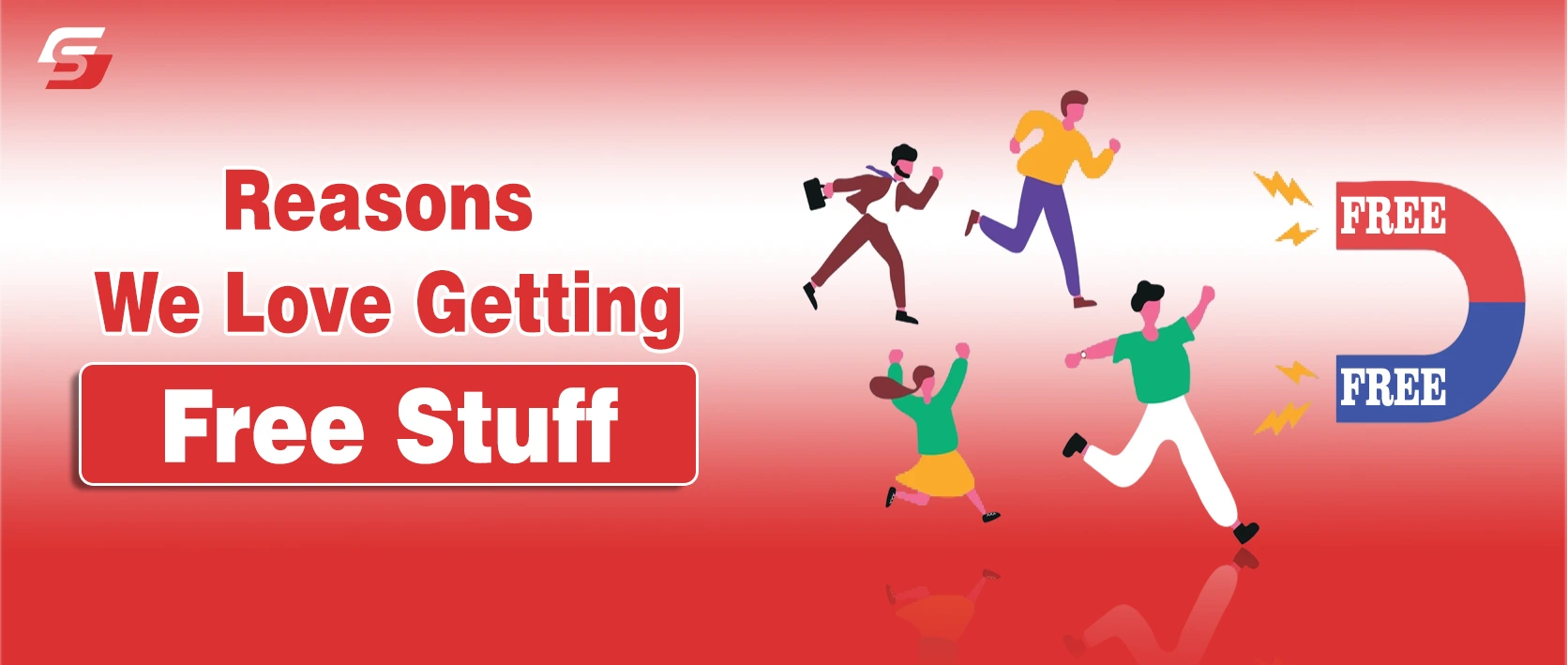
The word “free” has a powerful effect on us. The moment we see it, something almost instinctive kicks in—an urge to grab the offer before it disappears. Whether it’s a free sample at a store, a trial subscription, or a “buy one, get one free” deal, the excitement feels immediate and undeniable.
But why does “free” feel so irresistible?
The answer lies in how our brains are wired. The idea of getting something for nothing taps into deep psychological triggers that influence both our emotions and our decisions—often without us even realizing it. Brands often use this strategy to grab customer attention and improve retention.
In this blog post, you will find the key reasons we love getting free stuff.
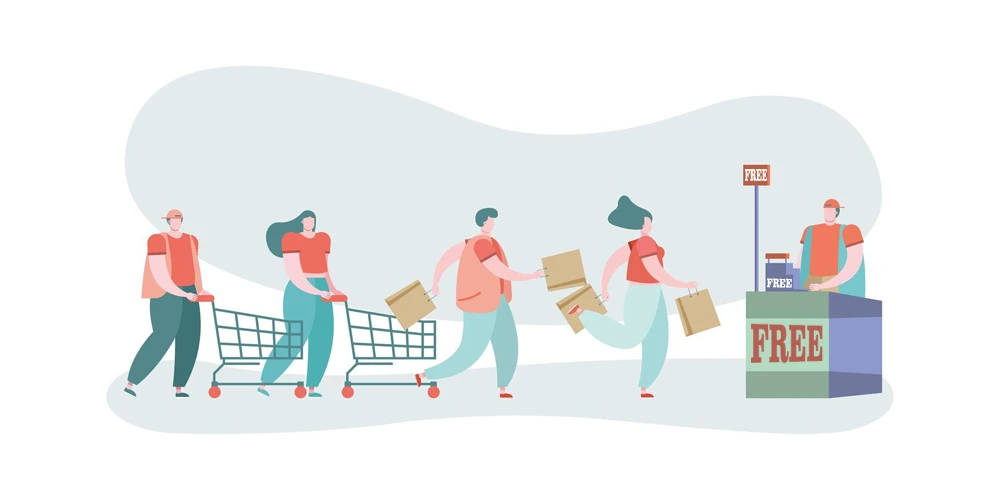
6 Reasons Why Free Stuff Feels So Good (And Why You Keep Falling for It)
1. The Zero-Price Effect
The most studied and well-known concept that explains our love of freebies is called the “zero-price effect”. When we see something becoming free, our rationality ceases to exist. Instead of asking ourselves, “Is it worth it?”, we think, “Why not?”
The mid-2000s experiment by behavioral economist Dan Ariely showed that people would choose a lower-quality item over something better just because it was free, even when a higher-quality option was available for a very small price.
This experiment explains the entire concept of free stuff: the moment the cost drops to zero, our decision-making shifts from logic to emotion.
2. The Emotional Reward
Free stuff simply triggers a pleasant emotional boost in us. It makes us feel happy.
Small, unexpected surprises make our brain release dopamine, a neurotransmitter and hormone associated with pleasure and reward.
This is exactly why we get so excited about getting small samples from stores. It’s less about what we get and more about how it makes us feel in the moment. These small bursts of positivity (a.k.a. dopamine) can be enough to later influence our loyalty and create a fake sense of “connection” to a brand or product.
3. Curiosity Without Commitment
The word “free” gives us a feeling of freedom and commitment without risk.
Just think about all the times you’ve tried a random app, signed up for a service or “free week” in your local gym, or clicked on an offer because it didn’t require payment. When there’s no money involved in decision-making, we become very comfortable following our curiosity and exploring something new.
In a sense, the word “free” relieves the pressure we feel when it comes to choosing something budget-friendly. You can’t make the wrong choice if it’s free, right?
4. The Power of Reciprocity
Another thing that keeps us hooked up on samples and free trials is a sense of reciprocity. When someone gives us something for free, it creates a real subtle urge to give back.
Reciprocity is a completely natural social behaviour, but corporations have weaponised it. The smallest gift you get can create a sense of connection, encouraging you to engage further. Especially, if this something gave you a tangible value.
This phenomenon was highlighted by a plethora of social psychologists, especially by Dr. Robert Cialdini, who showed that even small gifts trigger a sense of obligation to reciprocate.
That’s why free offers are so widely used; they act as a first step in building trust.
5. Free as a Starting Point
In the modern digital world, “free” often acts as a starting point rather than a final offer. That’s how all these platforms, products, and services introduce themselves to us.
These days, you’re not being asked to commit from the get-go; companies let you explore first. This creates a user-friendly, stress-free vibe where you can decide whether to subscribe or not. The online casino industry is an excellent example: it reflects this trend by offering to try out new casino no deposit bonus promotions to users who would never even consider playing before they saw the offer.
Offers like these lower the barrier to entry and allow us to explore and experiment without pressure.
6. A Sense of Winning
Another powerful factor that contributes to our love of free things is the feeling of winning.
Finding something you wouldn’t normally choose for free makes it feel valuable and makes us feel like we won something. We tend to accept or take free stuff even if we wouldn’t normally pay for it.
This simple act of finding a good deal just feels satisfying and hard to resist.
Conclusion: Why Free Works?
The appeal of “free” goes far beyond saving money. It taps into our emotions, reduces perceived risk, sparks curiosity, and creates a sense of reward and connection.
Free offers make us feel good—and that feeling is often more powerful than logic.
When used wisely, they can help us discover new products, experiences, and opportunities we might never have explored otherwise. But understanding the psychology behind them also helps us make more mindful decisions.
Because sometimes, the real cost of “free” isn’t money—it’s influence.