




For most healthcare businesses, the goal of the business is to help patients in their respective discipline, not process administrative paperwork. While the latter is what happens most often, new technology may shift that balance. Artificial intelligence (AI) is a technology that has seen massive adoption across the globe.
Despite this, the healthcare industry only has around 1% of applications utilizing AI. So, what is causing this underutilization? Traditionally, AI has been used mainly for virtual chatbots to handle customer questions. However, this is not only a limited use of the technology, but also not the area where healthcare staff want the most help.
According to surveys, over 72% of healthcare professionals want solutions that reduce time spent on administrative and operational tasks, such as document handling, compliance workflows, and coordination with vendors, including billing providers, labs, and medical waste disposal services, so they can focus more on patient-facing work.
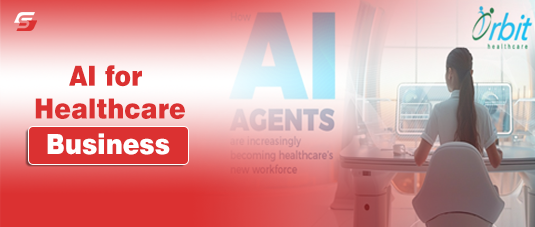
Companies like Orbit Healthcare have released their AI, which was built from the ground up with healthcare companies and administrative tasks in mind. One of the most common tasks, insurance information capture, can be done in mere seconds by providing the AI a picture of an ID card or an image of a referral order.
It can also process and catalogue various documents like payer correspondence letters, lab requisition forms, or other inbound documents. However, it can also contribute in a more active role as well. By using an AI voice call or accessing an insurance company’s portal, AI can verify a customer’s benefits on a healthcare staff’s behalf.
From there, it can determine the expected out-of-pocket cost, or it can request a prior authorization if it deems it necessary. This technology can even help with inbound referral processing, which shrinks the processing time from an average of a full business day to around 24 seconds.
When deployed, this technology also saves businesses over 50 hours on average due to the automation functionalities. It also comes with anywhere between 40% to 70% cost savings and an overall 20% increase in revenue. The plethora of abilities and the potential benefits that this technology offers make it very enticing for just about any healthcare business.
As a result, over 71% of healthcare workers believe this technology will be integral to healthcare within the next 5 years. Regardless of what stage your business is currently at, one thing is certain. Getting an AI agent in healthcare for your business is the best way to get ahead of your business’s competition.

Source: Orbit Healthcare