




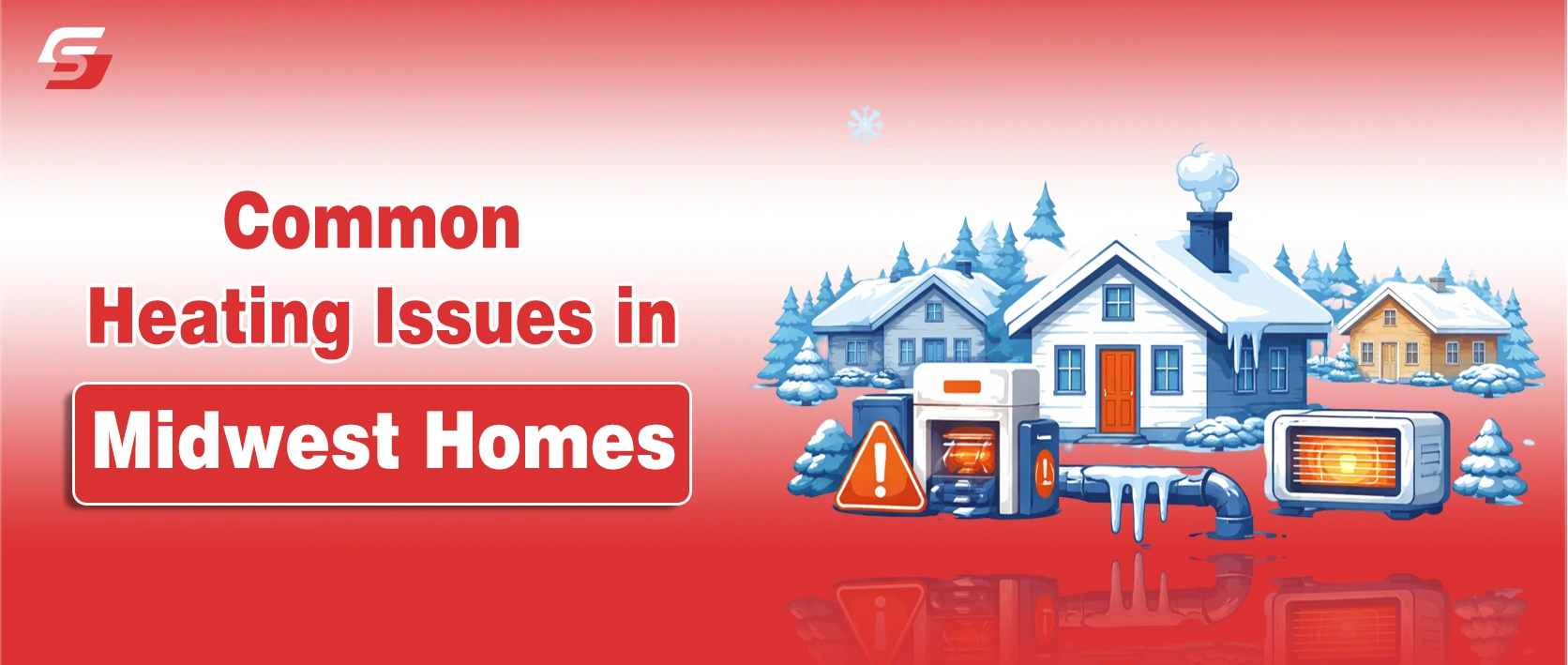
Midwest winters are long, freezing, and often unpredictable—which means your heating system works overtime for months. With that kind of demand, it’s no surprise that many homeowners run into recurring heating problems. The key is knowing what these issues look like and how to deal with them before they turn into costly repairs.
The good news? Once you know what to look for, you can often spot issues early—and fix them before they turn into expensive repairs.
In this blog post, you will learn about the most common heating problems in Midwest homes—and what you can actually do about them.
Heating Issues in Midwest Homes & Possible Fixes
Furnace Running Constantly
A furnace that seems to run all the time can quickly drive up energy bills and put unnecessary strain on the system. While it’s normal for heating systems to work harder during extreme cold, nonstop operation often points to an underlying issue. Dirty air filters, thermostat malfunctions, or heat loss from poor insulation are usually to blame.
How to fix?
The first step is to check and replace the air filter, as restricted airflow forces the system to work harder than necessary. It’s also worth checking thermostat settings to make sure everything is calibrated correctly. Sealing drafts around windows and doors can reduce heat loss and ease the workload on your furnace.
If the system still runs constantly, professionals like Garrett furnace repair may be needed to identify worn components or deeper issues.
Uneven Heating Throughout the Home
Uneven heating is one of the most frustrating problems, especially when one room feels perfectly warm while another feels like it has no heat at all. This usually happens because warm air isn’t being distributed properly. Poor insulation, blocked vents, or leaks in the ductwork can all prevent heat from reaching certain areas. In older homes, this problem is even more common due to outdated systems or structural inefficiencies.
How to fix?
Fixing uneven heating starts with improving airflow and insulation. Make sure vents are open and not blocked by furniture, and check if certain rooms need better insulation. In some cases, sealing duct leaks or installing a zoning system can make a noticeable difference. If the issue continues, the furnace itself may need inspection to ensure it’s distributing heat efficiently.
Short Cycling
Short cycling happens when your furnace turns on and off frequently without completing a full heating cycle. This not only reduces efficiency but also increases wear and tear on the system. Over time, it can lead to more serious breakdowns if not addressed. The issue is often caused by overheating, restricted airflow, or a furnace that isn’t properly sized for the home.
How to fix?
Addressing short cycling usually involves improving airflow and ensuring the system isn’t overheating. Replacing a dirty filter is often the simplest and most effective fix. Checking vents for obstructions and making sure the thermostat isn’t placed near heat sources can also help. If the problem continues, it may require a professional assessment to determine whether the unit size or internal components are the root cause.
Strange Noises from the Furnace
Heating systems aren’t completely silent, but loud or unusual noises are almost always a warning sign. Banging, rattling, or squealing sounds typically indicate loose, worn, or damaged components inside the system. Ignoring these noises can allow small issues to develop into more serious and expensive repairs.
How to fix?
The best approach is to act early. If it’s safe, you can check for loose panels or visible debris around the unit. However, most internal issues should be handled by a professional. Scheduling an inspection at the first sign of unusual noise can prevent further damage and extend the life of your furnace.
Cold Air Coming from Vents
When your system is running but blowing cold air, it can feel like your heating isn’t working at all. This problem is often linked to simple issues like incorrect thermostat settings or more technical problems such as ignition failures or overheating components. Sometimes, the system temporarily shuts off the heating element while the fan continues to run.
How to fix?
Start by checking your thermostat to ensure it’s set to “heat” rather than “fan.” Replacing the air filter can also help if airflow is restricted. If the issue persists, the problem may lie within the ignition system or heating elements, in which case professional repair is usually required.
Ignition or Startup Problems
Cold Midwest weather can take a toll on furnace ignition systems. Moisture, freezing temperatures, or general wear can make it difficult for the system to start properly. If your furnace struggles to turn on or requires multiple attempts, it’s often a sign that the ignition system is failing.
How to fix?
Basic troubleshooting includes checking the power supply and ensuring the pilot light is functioning if your system uses one. Resetting the furnace may resolve minor issues, but repeated startup problems should be handled by a technician. Ignition components are delicate and often require professional repair or replacement.
Dirty or Clogged Air Filters
Clogged air filters are one of the simplest yet most common causes of heating problems. When filters are dirty, airflow becomes restricted, forcing the system to work harder to circulate warm air. This not only reduces efficiency but can also cause overheating and unexpected shutdowns.
How to fix?
The fix is simple but often overlooked—replace your air filter regularly, especially during heavy-use winter months. Keeping filters clean improves airflow, reduces strain on the system, and helps maintain consistent indoor temperatures.
Poor Indoor Air Quality
During winter, homes are sealed tightly to keep out the cold, which can lead to stale, dry, and dusty indoor air. Heating systems can contribute to this problem by circulating allergens and reducing humidity levels, making the air feel uncomfortable and sometimes irritating.
How to fix?
Improving indoor air quality starts with regular maintenance. Replacing filters, cleaning ducts, and using a humidifier can make a big difference. In some cases, adding an air purification system can further improve comfort and reduce allergens in the home.
Aging Heating Systems
Older furnaces tend to struggle the most during Midwest winters. As systems age, they lose efficiency and become more prone to breakdowns. What starts as a minor issue can quickly escalate when the system is under constant demand.
How to fix?
If your furnace is older and requires frequent repairs, it may be time to consider an upgrade. In the meantime, regular maintenance can help extend its lifespan and keep it running as efficiently as possible. Monitoring performance and addressing small issues early can prevent sudden failures during peak winter months.
Final Thoughts – Keeping Your Midwest Home Comfortable
Heating issues in Midwest homes are often predictable and preventable. Most problems start small—like a dirty filter or minor airflow restriction—but can quickly grow if ignored. Staying proactive with maintenance and addressing issues early can save you from unexpected breakdowns and costly repairs.
A well-maintained heating system not only keeps your home comfortable but also ensures efficiency throughout the harsh winter season.